

STARTING A BUSINESS PLAN TEMPLATE: HOW TO ACTUALLY USE ONE

You have a business idea. Maybe you have been sitting on it for months. You know you need a plan - everyone says so - but every time you open a blank document, you freeze.
The problem is not that you lack ideas. It is that you do not know where to start or what actually matters. A "Starting a business Plan" template can fix that. It gives you a structure to follow instead of a blank page to stare at. But here is the thing most people miss: the template itself is not the point. What you put in it is.
This post walks through how to choose the right template, what to include in each section, and how to turn a generic framework into something that actually helps you build a real business.
📥 And if you want to download a simple printable business plan, you can find it an the end of this page.

WHY MOST PEOPLE GET STUCK BEFORE THEY EVEN START
The blank page problem is real. You sit down to write a business plan and suddenly every question feels impossible.
What is my target market?
How do I write a financial projection when I have never made a sale?
What even goes in an executive summary?
So you research. You read articles. You open three different templates. You compare them. You close all the tabs and decide to do it tomorrow. This cycle can go on for weeks.
The issue is not that you are unprepared. It is that starting from zero requires you to make too many decisions at once. A good template removes that friction. It tells you what to write first, what to write second, and what you can skip for now.
You do not need a perfect plan. You need a working plan - something you can actually use to make decisions and move forward.
WHAT A STARTING A BUSINESS PLAN TEMPLATE SHOULD INCLUDE
Not all templates are created equal. Some are built for investors. Some are built for banks. Some are built for large companies with entire teams dedicated to strategy.
If you are a small business owner, a coach, a consultant, or a service provider - most of those templates are overkill.
Here is what you actually need:

Executive summary. A one-page overview of your business. What you do, who you serve, and why it matters. Write this last, even though it goes first.
Business description. What problem are you solving? What is your solution? This section forces you to articulate your value clearly.
Target market. Who are you selling to? Be specific. "Women aged 25-45" is not a target market. "Freelance graphic designers who want to raise their prices but feel stuck" - that is a target market.
Products or services. What exactly are you selling? At what price points? How does each offer connect to your customer's problem?
Marketing and sales strategy. How will people find you? How will you convert interest into sales? You do not need a 20-page marketing plan. You need a clear answer to these two questions.
Financial projections. Even if you are guessing, put numbers down. Revenue goals. Expected expenses. Break-even point. This section keeps you honest about whether your business model actually works.
Operational plan. How will you deliver what you are selling? What tools, systems, or processes do you need in place?
Don't have time for creating your own branding elements? Choose my premade Branding Kits that include a Full Instagram Bundle plus other branding and marketing materials you may need - all in one style & aesthetics to keep your brand cohesive across all the social media platforms:

HOW TO FILL IN YOUR TEMPLATE WITHOUT OVERTHINKING IT
Here is where most people stall. They download a template, open it, and immediately feel overwhelmed by how official it looks.
Forget official. Write like you are explaining your business to a friend who asked what you are working on.
Start with the section that feels easiest. For most people, that is the products or services section. You already know what you are selling. Write it down.
Then move to target market. Picture one specific person who needs what you offer. Describe them:
What are they struggling with?
What have they already tried?
What would make their life easier?
From there, the marketing section becomes clearer:
Where does that person spend time online?
What would get their attention?
What would make them trust you enough to buy?
Do not worry about perfect language. Do not worry about impressing anyone. The goal is to get your thinking out of your head and onto paper where you can actually evaluate it.
You can polish later. Right now, you need a draft.

THE SECTION MOST PEOPLE SKIP - AND WHY IT MATTERS MOST
Financial projections. I know. Numbers are not fun for everyone :)
But here is the truth: if you cannot make the math work on paper, it will not magically work in real life either.
You do not need a spreadsheet with 47 tabs. You need answers to a few basic questions:
How much does it cost to run your business each month? Include tools, subscriptions, any contractors, and your own time.
How much do you need to earn to cover those costs and pay yourself?
How many sales does that require at your current prices?
Is that number realistic given your audience size and marketing capacity?
If the numbers do not work, you have three options: lower your costs, raise your prices, or increase your volume. A business plan forces you to see this clearly before you have invested months of effort.
TAILORING A GENERIC TEMPLATE TO YOUR SPECIFIC BUSINESS
Every template you find online is generic by design. It has to be - it is meant to work for thousands of different businesses.
Your job is to make it specific.
This means cutting sections that do not apply to you. If you are a one-person service business, you probably do not need a detailed organisational chart. If you are not seeking investors, you can simplify the financial section.
It also means adding sections that matter for your situation. If your business relies heavily on referrals, include a referral strategy section. If you are building an online presence, add content and social media notes. If you are selling templates or digital products, include notes on product development and launch plans.
The template is a starting point. Not a rulebook.
I made this mistake early on. I downloaded a template meant for startups seeking venture capital - sections on equity structure, board composition, exit strategy. None of that applied to my Etsy shop. I spent hours filling in sections that did not matter and skipped the ones that did.
When I finally threw out the fancy template and wrote a simple plan focused on what I was actually building - a product line, a marketing approach, and a realistic revenue goal - everything clicked.

WHAT TO DO AFTER YOUR PLAN IS WRITTEN
A business plan is not a document you write once and file away. It is a tool you return to.
Set a reminder to review it quarterly. Are your assumptions still accurate? Has your target market shifted? Are your financial projections on track or way off?
Update it as you learn. Your first version will be wrong in places. That is fine. The point is to have a baseline you can measure against.
Use it to make decisions. When you are wondering whether to launch a new offer, add a new platform, or raise your prices - pull out your plan. Does this decision move you closer to your goals or further away?
The businesses that grow are not the ones with the prettiest plans. They are the ones that plan, execute, measure, and adjust
YOUR NEXT STEP
A starting a business plan template is not magic. It will not build your business for you.
But it will give you a structure to organise your thinking, a framework to test your assumptions, and a document you can actually use to make progress.
Find a template that fits your business type. Fill it in section by section without overthinking. Get your first draft done - messy is fine. Then refine it as you go.
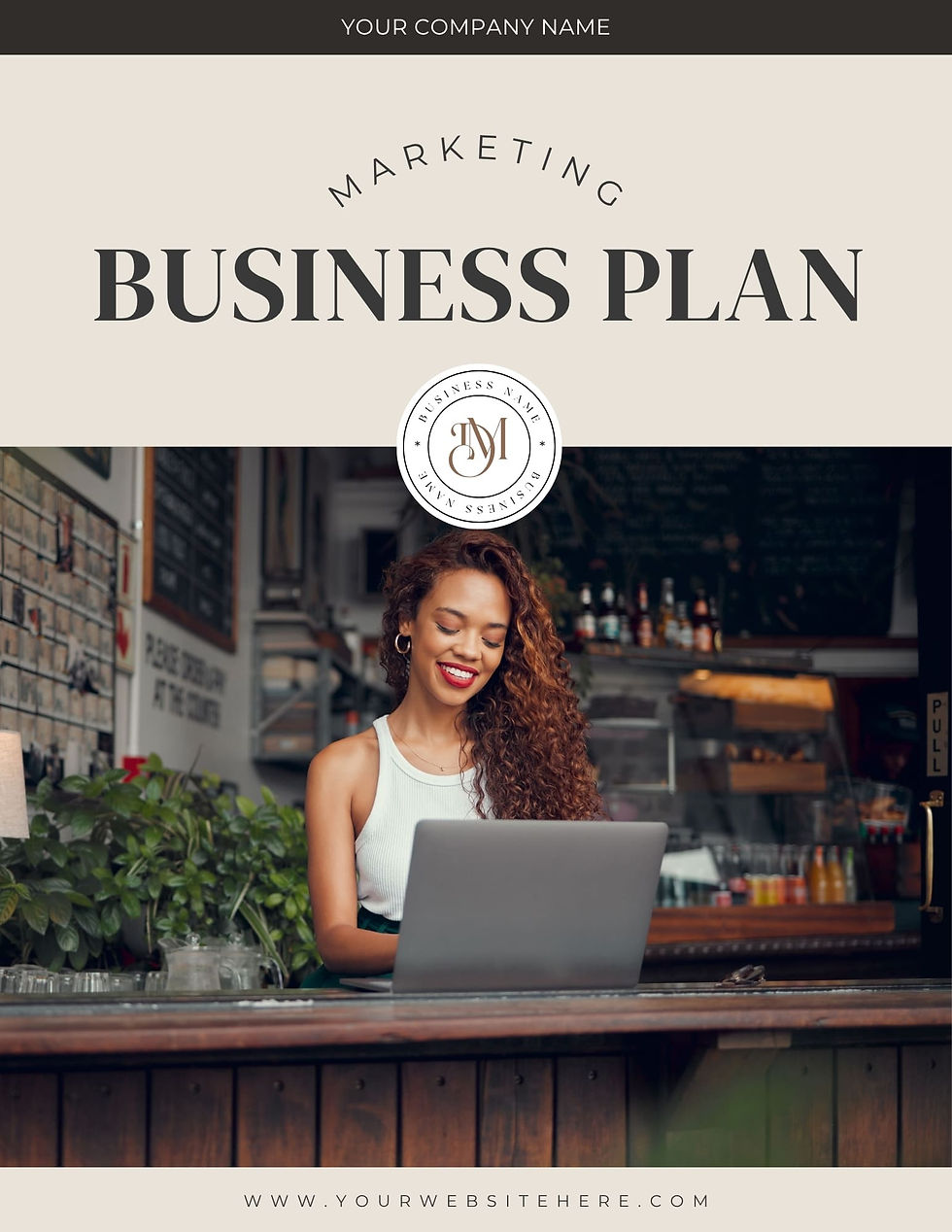
If you are ready to start, grab this free "Starting a business Plan" template made in Canva (easy to edit and print):
----
Let me know in the comments below if you want me to cover any branding or marketing topics in more depth, and I’ll make sure to create a blog post about it in the future.

Are you ready to bring your business to the next level? Get a full rebranding of your business with our premade Branding Kits that includes everything from logos and business cards to flyers, brochures, ebooks, webinar slides and so much more!


Comments